
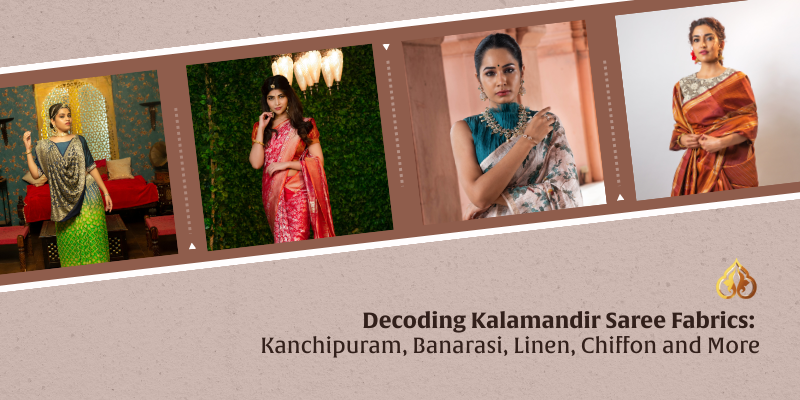
Sarees are many things at once. They are ritual and everyday, they are texture and colour, and most of all they are a language of craft that speaks differently depending on the fabric used. At Kalamandir we have spent years curating sarees so that each drape carries a clear voice. In this guide we will walk you through the most loved saree fabrics available at Kalamandir and explain why each one is worth knowing about before you choose your next festive or everyday saree.
What Makes Kanchipuram Silk So Special
Kanchipuram silk is often the first name that comes to mind when people talk about tradition and ceremony, and for good reason. Woven in the south, Kanchipuram pattu sarees are prized for their sturdy mulberry silk, temple inspired borders and colour contrasts that read magnificent in photos and in daylight alike. Explore the Kanchipuram range at Kalamandir and you will see how these sarees are crafted to be handed down through generations.
Why Banarasi Silk Remains a Classic
Banarasi silk is a different kind of story. Coming from Varanasi, Banarasi sarees are known for dense brocades, floral jaals and zari work that is often made with real metal thread. If you are choosing a bridal or celebratory saree and you want a weave that announces itself the moment you walk into a room, a Banarasi piece from our Kalamandir Banarasi collection will do that with grace.
Where Do Silk Blends and Tissue Sarees Fit In
Not every occasion calls for heavy silk, which is why lighter silks and silk blends are so useful in a wardrobe. Kalamandir’s silk sarees category includes tissue, fancy and blended silks that shimmer under lights without the weight of a formal saree, making them excellent for evening gatherings and long celebrations. These sarees offer elegant movement and a softer drape that suits both traditional and contemporary styling.
Is Linen a Good Choice for Sarees
For discreet, cooler elegance there is linen, a fabric that ages beautifully, breathes easily and suits warm weather celebrations as well as daytime gatherings. Kalamandir’s linen sarees are perfect when you want clean lines and a subtle texture that reads modern while feeling natural.
How Do Georgette and Chiffon Compare
Georgette and chiffon are both celebrated for their ease of drape. Georgette gives you a gentle float and textured body while chiffon offers that soft, weightless fall that makes movement look effortless. Kalamandir features both fabrics across their collections so you can choose the ease that matches your styling mood. You can view georgette sarees and explore chiffon style options within the silk section.
Why Bandhani and Kalamkari Are Timeless
Two other fabrics worth noting are Bandhani and Kalamkari, both of which are rooted in regional craft traditions. Bandhani uses tie and dye techniques to create vibrant patterns that are instantly festive, while Kalamkari is hand painted or block printed and reads like fabric storytelling. Kalamandir’s Bandhani and Kalamkari pieces are curated to balance authenticity and contemporary appeal, making them ideal for cultural and modern wear alike.
Choosing the Right Kalamandir Saree for You
When you choose a Kalamandir saree you are choosing a carefully selected weave, colour story and finish, with attention paid to how it will drape, how it will photograph and how it will feel after a day of celebrations. If you are unsure where to begin, visit a Kalamandir store or browse our online collections to try a few fabrics, compare textures and decide which fabric truly matches your occasion.
For quick browsing you can begin with
Banarasi,
Kanchipuram,
Silk,
Linen,
Bandhani,
and Kalamkari collections.
Each fabric tells a different story and each drape brings you a little closer to the heritage that Kalamandir celebrates.